
Commercial Real Estate Loans Utah: Business & Investor Financing
UtahLowRate.com • Daniel Paris • NMLS 243976
Commercial property financing information for Utah business owners and real estate investors.
Commercial real estate loans Utah can help finance the purchase, refinance, renovation or construction of business and income-producing property. The right structure depends on whether your business occupies the building or tenants generate the repayment income.
Start with the property, cash flow and your goal. Ask Daniel Paris to review the scenario and discuss financing options, documentation and the next steps for your transaction.
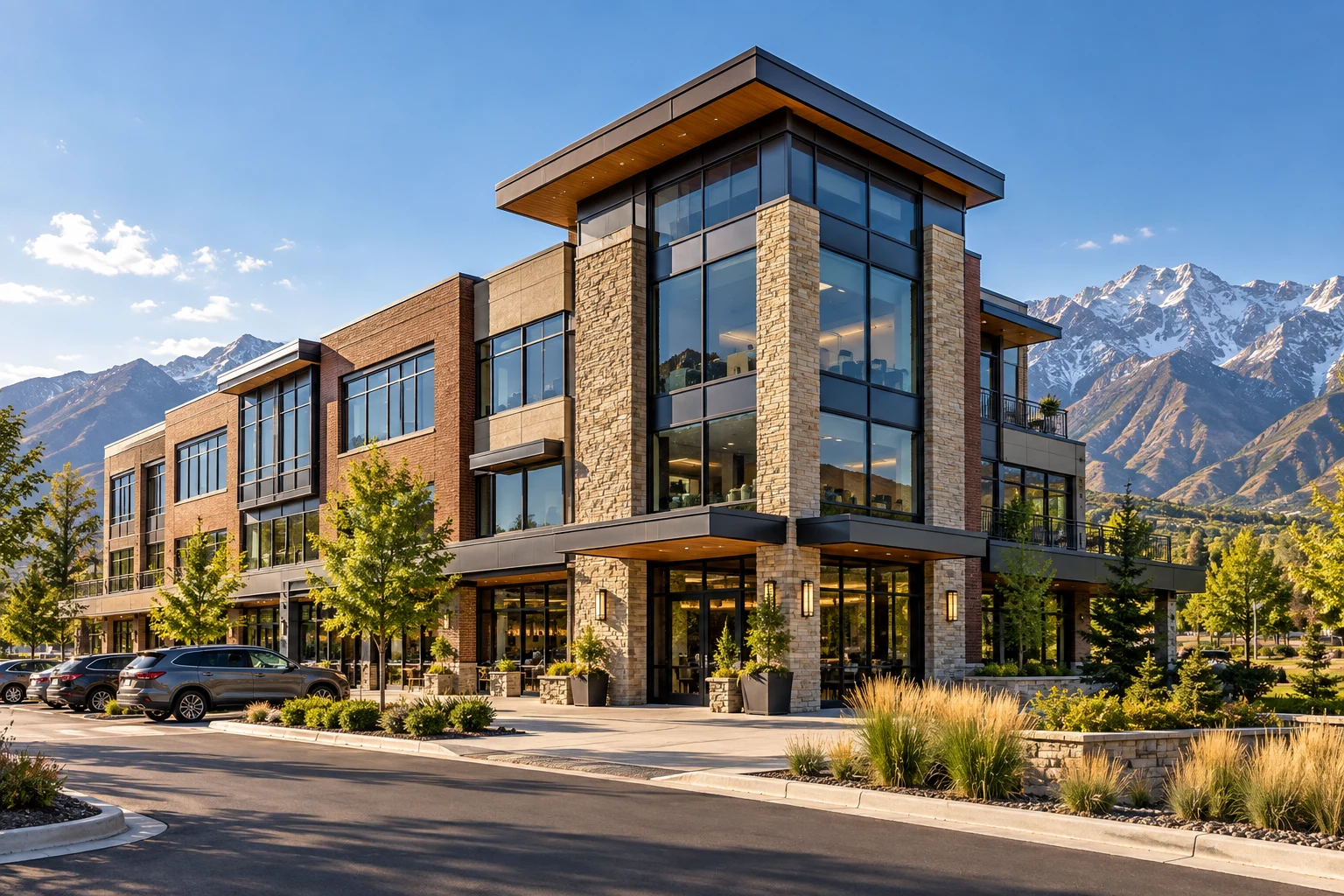
Business property or investment property: start here
Owner-occupied financing focuses on real estate your operating business uses. Think of a manufacturer buying a warehouse, a professional practice acquiring office space or a retailer purchasing its storefront. Business earnings, ownership, occupancy and repayment ability are central to the review.
Investor financing focuses on income-producing property leased to tenants. Rent rolls, leases, occupancy, expenses and the durability of property income help determine the financing structure. A property with strong current leases presents a different scenario from a vacant building that needs renovation and lease-up.
- Office and medical office: tenant quality, lease expiration dates, building condition and any specialized improvements.
- Retail and mixed-use: tenant concentration, permitted uses, access, parking and the mix of residential and commercial space.
- Industrial and warehouse: location, loading access, functional layout and environmental considerations.
- Multifamily: unit count, rent history, occupancy and operating expenses. Five or more residential units generally enter commercial multifamily financing.
- Special-purpose property: hospitality and other specialized uses may require program-specific operating history and valuation review.
For a single-family rental or an eligible small residential rental property, explore Utah residential DSCR mortgage loans. Those programs use different underwriting from an office, retail or industrial loan. For larger apartment projects, see FHA multifamily financing information.
Commercial real estate financing options to compare
These are common financing categories to discuss during a review. Availability depends on the lender, property and borrower; a category listed here is not a commitment to provide that program.
| Financing category | Potential use | Questions to ask |
|---|---|---|
| Conventional commercial loan | Purchase or refinance of owner-occupied or stabilized investment property | What are the maturity, amortization, recourse and cash flow requirements? |
| SBA 7(a) | Eligible operating business real estate and other permitted business uses | Does the business meet SBA eligibility and occupancy rules? What costs can be included? |
| SBA 504 | Eligible business fixed assets, including qualifying building purchase or construction | How will the senior loan, CDC/SBA portion and borrower contribution fit together? |
| Commercial bridge or private financing | Shorter-term acquisition, repositioning or a transitional property | What is the realistic refinance or sale exit, and what happens if it takes longer? |
| Commercial construction financing | Ground-up development or substantial improvements | How are equity, draw inspections, contingency, completion and takeout financing handled? |
SBA financing for an operating business
The SBA 7(a) program allows eligible real estate and other business uses. The SBA 504 program supports major fixed assets through a Certified Development Company and a senior lender. SBA 504 funds cannot be used for working capital, inventory or speculation or investment in rental real estate. Confirm current eligibility, occupancy and structure with the participating lender or CDC.
Construction and bridge financing need an exit plan
A development proposal should connect acquisition, improvements and eventual repayment. Identify the expected source of repayment: sale, stabilized cash flow or a separately approved permanent refinance. Include timing cushions and a plan for cost overruns. A future refinance is not automatic.
Building single-family homes for sale is a distinct use case. Visit our private spec construction loans Utah page and Utah home builder construction loan guide for residential spec project planning.

How do you qualify for a commercial real estate loan in Utah?
A lender evaluates repayment capacity, collateral and the people or entity behind the transaction. Prepare a clear story: what you are buying or refinancing, how it produces income and how the proposed debt will be repaid.
Commercial financing terms explained
- Net operating income (NOI)
- Property income after operating expenses, before debt service and income taxes. Lenders may adjust reported figures for vacancy, management and reserves.
- Debt service coverage ratio (DSCR)
- Annual NOI divided by annual debt service. An illustrative $150,000 NOI and $120,000 debt service equals 1.25. This is a math example, not a qualification threshold.
- Loan-to-value (LTV)
- Loan amount divided by the lender’s accepted property value. Appraisal and program rules affect the value used.
- Loan-to-cost (LTC)
- Loan amount divided by eligible project cost, commonly considered for construction or redevelopment.
- Recourse and guarantees
- Describe the borrower’s and guarantors’ repayment obligations. Ask about personal guarantees and exceptions even when a loan is described as nonrecourse.
Documents to prepare
- Property address, intended use, purchase agreement or current loan statement, requested amount and target closing date.
- Rent roll, leases, operating statements and a realistic budget for investor property.
- Business financial statements, tax returns and information about owner occupancy for an operating business.
- Borrower and guarantor financial information, liquidity, ownership and entity documents.
- For construction: plans, contractor qualifications, detailed budget, permits, schedule and proposed exit.
The lender will provide a transaction-specific checklist. Appraisal, environmental review, title, insurance and property condition work may also be required. Ask which reports to order and when so you avoid duplicating third-party work.
Commercial loan rates, down payments and total costs
There is no single commercial real estate interest rate or down payment that fits every Utah property. Pricing and leverage depend on property type, occupancy, cash flow, borrower strength, loan size and structure. Request a written property-specific proposal rather than relying on a residential mortgage rate advertisement.
- Rate structure: fixed or variable, index and margin, reset timing and any floor.
- Payment and maturity: distinguish the amortization schedule from the date the balance is due. A long amortization can still have an earlier balloon payment.
- Closing costs: lender and broker fees, appraisal, legal, title, environmental review and other required reports.
- Ongoing obligations: reserves, financial reporting, covenants and insurance requirements.
- Exit costs: prepayment penalties, yield maintenance or other provisions that may affect a sale or refinance.
Compare offers using the same loan amount, holding period and repayment assumptions. Include funds for improvements, reserves and transaction expenses when planning your available cash.
Commercial property financing across Utah markets
Tell us where the property is located and how the local market supports the plan. Transactions in Salt Lake City and Salt Lake County, Provo, Orem, Lehi and Utah County, Ogden and Weber County, and Layton and Davis County can differ in tenant mix, supply and demand. Park City, Summit County, Heber City and Wasatch County, and St. George and Washington County also require property-specific review.
For each location, evaluate actual lease comparables, vacancy, access, zoning and permitted uses. For a construction or redevelopment project, confirm requirements with the applicable city or county planning and building departments. A Utah address alone does not establish loan eligibility.
From initial review to closing
- Share the scenario. Provide the property, amount, use and timeline through the quote request page or call Daniel.
- Review potential structures. Discuss borrower qualifications, documentation, costs and program fit.
- Complete underwriting and due diligence. Supply requested documents and coordinate property reports, title and other conditions.
- Review final terms. Confirm payments, maturity, guarantees, covenants and prepayment terms before closing.
- Plan after closing. Track reporting deadlines, reserves, project draws where applicable and the eventual maturity or refinance.
Timing depends on the property, program, documentation and third-party reports. Ask for a realistic schedule before committing to a closing deadline.
Utah commercial real estate loan FAQs
What is a commercial real estate loan in Utah?
A commercial real estate loan finances property used by a business or held for investment, such as an office, retail building, warehouse or apartment property. Qualification depends on the property, cash flow, borrower and loan program.
How much down payment do I need for a Utah commercial property?
There is no single down payment requirement. The lender considers property value, cash flow, occupancy, borrower strength and program rules. Budget for closing costs, reserves and improvements in addition to your equity contribution.
Can an LLC get a commercial real estate loan?
An LLC may borrow when the lender accepts the entity structure. Expect organizational documents, ownership information and authorized signers. Personal guarantees may still be required; LLC ownership does not automatically create a nonrecourse loan.
Can I use an SBA loan for rental investment property?
SBA financing is intended for eligible operating businesses. SBA 504 funds cannot be used for speculation or investment in rental real estate. Owner-occupied business property needs a separate eligibility and occupancy review.
What is DSCR for commercial real estate?
Debt service coverage ratio is net operating income divided by annual debt service. For example, $150,000 of annual NOI divided by $120,000 of annual debt payments produces a 1.25 DSCR. Each lender sets its own calculation adjustments and minimum.
Can I refinance a commercial property in Utah?
A refinance may replace existing debt, change the payment structure or provide eligible cash out. Approval depends on value, cash flow, leverage and borrower qualifications. Compare prepayment costs, maturity dates and total closing costs before proceeding.
How do I start a commercial loan review?
Contact Daniel Paris at UtahLowRate.com by calling 801-604-4949 or using the quote request page. Provide the property address, purchase price or estimated value, requested loan amount, intended use and target closing date.
Discuss your Utah commercial property financing
Buying a building for your business, refinancing an investment property or planning a construction project? Bring the property details and your goals to Daniel Paris at UtahLowRate.com.
Daniel Paris • NMLS 243976 • 27+ years of mortgage experience
801-604-4949 • About Daniel and UtahLowRate.com
Financing is subject to lender review and approval. Programs, requirements and terms vary by transaction. Images are AI-created conceptual illustrations, not completed or financed projects.
Related Utah financing resources
- Residential DSCR loans for LLCs in Utah
- Utah residential DSCR refinance options
- FHA multifamily loans Utah
- Private spec construction financing for homes
Program references: SBA 7(a), SBA 504 and the OCC Commercial Real Estate Lending handbook. Content updated September 30, 2026.

