
How Do Utah Apartment Construction Loans Work With Long-Term Financing?
Quick answer: Utah apartment construction loans can fund eligible land and building costs through staged advances while a project is built. After construction, owners may move to a permanent apartment loan or refinance, if the property, cash flow, borrower, and lender rules qualify. A construction-to-permanent structure may combine stages, but no later refinance is guaranteed.
This guide compares construction financing with long-term commercial apartment loans, explains what lenders review, and outlines documents to prepare. Terms vary by lender and project. Review a written term sheet before making commitments.
How do Utah apartment construction loans work?
Construction financing is short-term money for a development or major project. Many lenders release funds in draws as work is completed. The lender may review invoices, inspections, title status, and the remaining budget before approving each advance. The borrower usually needs a clear plan for the land, permits, contractor, schedule, costs, and repayment.
For a Utah apartment project, build a full budget before seeking terms. Include land, design, permits, impact and utility costs, construction, insurance, taxes, contingency, interest during construction, and operating costs before the property earns rent. A budget that leaves out soft costs or lease-up expenses can create a funding gap.
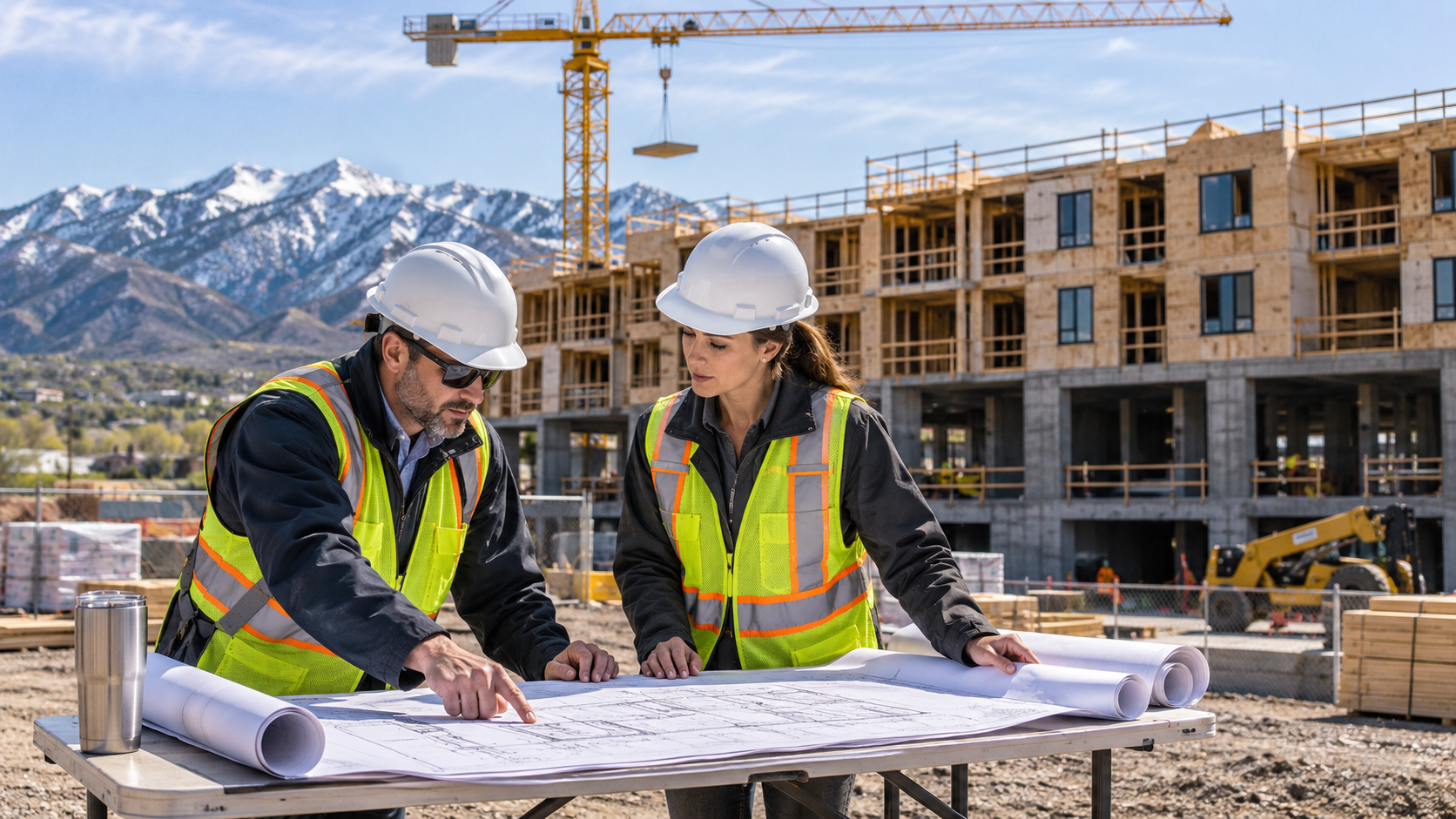
Loan size and borrower cash needs depend on the lender’s review. Lenders may consider total project cost, value when complete, sponsor experience, available cash, guarantees, contractor strength, and the plan to repay or refinance. Ask how the lender defines eligible costs, how often draws occur, which reports are required, and whether reserves must be held back.
Utah apartment construction loans can have different draw systems and borrower contribution rules, so compare these details before choosing a lender. They may cover different stages. Some facilities fund land and construction. Others fund construction only after the borrower owns the site. A lender may also require the owner to contribute equity before or alongside loan advances. Do not assume land value, early work, or unpaid invoices will count the same way for every lender.
Which financing path fits each project stage?
Construction and long-term apartment loans solve different needs. A project may use more than one loan as it moves from site work to occupancy. These are common paths to discuss with a lender:
| Financing path | Possible use | Key points to compare |
|---|---|---|
| Bank or credit-union construction loan | Land, building costs, or a defined construction phase | Draw rules, inspection costs, interest carry, extensions, guarantees, and payoff plan |
| HUD Section 221(d)(4) | Eligible new construction or substantial rehabilitation of multifamily rental housing | HUD eligibility, application steps, timing, required reports, loan sizing, and lender availability |
| Construction-to-permanent structure | A project with a planned path from construction into longer-term financing | Conditions for conversion, completion tests, rate terms, lease-up requirements, and any new underwriting |
| Bridge or lease-up loan | A completed or renovating property that needs time to reach permanent-loan standards | Short maturity, extension options, fees, repair controls, and a realistic exit strategy |
| Permanent multifamily loan | An existing, operating apartment property or a qualifying near-stabilized development | Income review, amortization, maturity, recourse, reserves, and prepayment costs |
HUD identifies Section 221(d)(4) as an FHA-insured program for eligible multifamily new construction or substantial rehabilitation. It is not a fit for every project. HUD program rules and lender requirements apply. Fannie Mae also publishes a Near-Stabilization option for eligible newly built properties that have begun leasing but have not yet reached stabilized occupancy. The lender must confirm that a specific project meets current rules.
What do long-term apartment commercial loans consider?
Permanent apartment loans rely on the building’s income and the owner’s ability to meet the loan terms. A lender may review the rent roll, leases, unpaid rent, vacancy, concessions, operating expenses, property taxes, insurance, and repairs. The lender may calculate net operating income (NOI) and compare it with proposed debt payments. Each lender sets its own method and limits.
Compare the complete loan structure. The interest rate may be fixed or variable. The amortization period used to calculate payments can be longer than the loan’s maturity date. If the loan matures before it is fully paid off, the remaining balance is still due. Ask about prepayment fees, rate resets, extension rights, reserves, covenants, reporting, guarantees, and whether recourse applies.
Fannie Mae describes its conventional multifamily financing as first-lien permanent loans for the purchase or refinance of eligible conventional properties. Freddie Mac’s multifamily program offers financing through its lender network for properties that meet its requirements. These agency channels are not direct approval or a promise of a particular rate or loan amount.
How can owners move from construction to permanent financing?
Plan the exit before construction starts. A takeout loan or refinance may depend on completed work, certificates of occupancy, leases, occupancy, income, appraisal, and borrower finances. If a permanent lender needs the building to meet an income or occupancy test, a delay in leasing could affect timing and loan proceeds.
Ask whether permanent financing is a firm commitment or a future application. A future refinance can be affected by rates, property value, income, occupancy, market conditions, and lender rules at that time. Keep enough cash and time to handle delays. A bridge loan may be one option for an eligible property that needs more time, but it brings its own costs and maturity risk.

Hypothetical example · November 12, 2026: Assume a developer has land, approved plans, a contractor budget, and a proposed apartment project. During construction, the lender reviews the budget and project progress before releasing draws. After completion, the owner prepares leases, income and expense records, occupancy details, and updated property information for a permanent-loan review. The example shows a process only. It does not predict loan approval, cost, timing, or proceeds.
Utah planning steps and documents
Property rules depend on the city or county. When comparing Utah apartment construction loans, ask which local permits and utility approvals must be in place before the first advance. Before closing on land or setting a construction schedule, confirm zoning, permitted use, building approvals, utility access, parking, fire and life-safety requirements, and any recorded restrictions with the relevant local offices. Salt Lake City provides a zoning resource; other Utah communities have their own planning and building processes.
For a first lender discussion, gather:
- Property address, parcel information, unit count, and project description
- Site control or purchase contract, plans, permits, zoning information, and construction schedule
- Itemized development budget, contractor bids, contingency, and draw forecast
- Borrower and guarantor financial statements, liquidity, experience, and entity documents
- Projected rents, operating expenses, lease-up plan, and the proposed repayment or permanent-financing plan
- For a refinance: current note, payoff statement, maturity date, prepayment terms, rent roll, and recent operating statements
Do not treat land equity, borrower contribution, closing costs, construction reserves, and interest reserves as interchangeable. Ask the lender to list what must be funded at closing and what must remain available during construction and lease-up.
Common questions about Utah apartment construction loans
How do I finance a new apartment building in Utah?
Start with site control, zoning, a complete cost budget, plans, contractor information, borrower finances, and a repayment plan. Then compare construction lenders and ask how draws, reserves, inspections, and extensions work.
Can one loan cover construction and long-term financing?
Some structures are designed to move from construction to permanent financing. Conversion depends on the written loan terms and project conditions. A future refinance may require a new lender review.
What is the difference between a construction loan and a permanent apartment loan?
A construction loan funds project work and often advances money over time. A permanent apartment loan is longer-term financing for an operating or otherwise eligible property, with repayment based on the loan contract and lender underwriting.
Does HUD Section 221(d)(4) finance apartment construction?
HUD describes Section 221(d)(4) as FHA insurance for eligible multifamily rental new construction or substantial rehabilitation. HUD and the participating lender determine project eligibility and current terms.
Can I refinance after my apartment project is complete?
Possibly, if a lender approves the property, income, occupancy, value, borrower, and loan purpose under its current rules. Review the construction loan’s maturity and payoff terms well before the planned refinance date.
Sources and review information
- HUD multifamily programs: Sections 221(d)(4) and 223(f) (reviewed November 12, 2026)
- Fannie Mae Near-Stabilization Financing (reviewed November 12, 2026)
- Fannie Mae Conventional Properties term sheet (reviewed November 12, 2026)
- Freddie Mac Multifamily financing options (reviewed November 12, 2026)
- Salt Lake City Planning and Zoning (reviewed November 12, 2026)
Author: Daniel Paris, Utah mortgage broker, NMLS #243976. Last updated: November 12, 2026. This article is general education, not a rate quote, loan offer, or commitment. Program terms and lender guidelines change. Confirm current eligibility and terms with the lender and local officials. Not all borrowers or properties qualify.
Discuss a Utah apartment financing plan
UtahLowRate.com works with borrowers across Utah, including Salt Lake City, Murray, Draper, Sandy, Park City, Provo, Orem, Lehi, and St. George. Share your project stage, unit count, location, budget, timing, and long-term goal for an initial discussion.
Daniel Paris · 801-604-4949 · UtahLowRate.com
Related reading: Utah commercial real estate loans and apartment refinance loans in Utah.

