
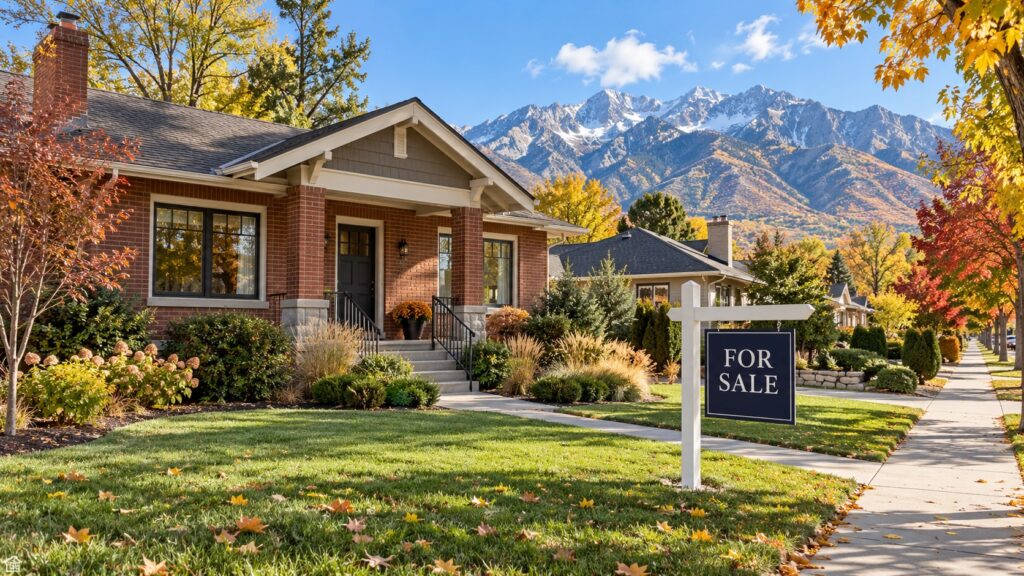
Utah Housing Market 2027: Crash or Reset?
Last updated: October 16, 2026
By Daniel Paris, Utah mortgage broker, NMLS #243976 | 27+ years of mortgage lending experience
Quick answer: The Utah housing market may cool further in 2027, but slower sales do not automatically mean a statewide price crash. Inventory, affordability, mortgage rates, local employment and a household’s reason for moving all matter. Buyers and sellers should make decisions from current neighborhood data and a realistic payment plan, not a national headline or one forecast.
A recent eXp Realty presentation featuring Leo Pareja frames the 2027 outlook around a housing correction that may show up through fewer transactions, more choices and affordability pressure rather than a uniform nationwide collapse. The video description also points to the possibility of existing-home sales falling below four million nationally. Those are forecasts, not guarantees—and national numbers do not predict what will happen on a particular street in Salt Lake City, Murray, Park City or St. George.
What does a housing market correction mean?
A housing correction can mean prices grow more slowly, sellers accept more concessions, listings take longer to sell, or sales volume declines. A crash is a sharper and broader drop in home values, often tied to forced selling, credit stress or a major economic shock. The terms are not interchangeable. A market can have a painful affordability problem and low transaction volume while many owners still have equity and choose not to sell at a discount.
That distinction matters in Utah. If fewer buyers can qualify at current rates, closed sales may fall even when qualified buyers remain active. At the same time, owners with low fixed-rate mortgages may keep their homes rather than list them. Local conditions can therefore look different across Salt Lake County, Utah County, Summit County, Wasatch County and Washington County.
What do the latest housing numbers show?
The latest available National Association of REALTORS® snapshot, released October 13, 2026, reports that September existing-home sales rose 1.5% month over month to a seasonally adjusted annual rate of 3.99 million. Inventory was 1.60 million homes, and the median existing-home price was up 1.3% from a year earlier. NAR also described August and September as the slowest sales months of the year. This is a mixed picture: activity is subdued, but the national median price was still higher year over year.
Other measures tell different stories because they cover different housing segments. The U.S. Census Bureau and HUD reported August new-home sales at a 684,000 annual rate and an 8.5-month supply of new homes. New construction and existing-home resales are not the same market; builders may use incentives or adjust the mix of homes they offer, while resale sellers compete with nearby listings.
| Measure | Latest reported figure | How to read it |
|---|---|---|
| Existing-home sales, U.S. (September 2026) | 3.99 million annual rate | Transaction pace, not a price forecast |
| Existing-home inventory, U.S. (September 2026) | 1.60 million homes | More choice can strengthen buyer negotiating power |
| 30-year fixed mortgage benchmark (October 15, 2026) | 7.40% | Freddie Mac survey benchmark, not a personal quote |
Sources: National Association of REALTORS® existing-home sales, U.S. Census Bureau and HUD new-home sales, and Freddie Mac’s October 15, 2026 mortgage-rate survey.
How is the Utah market different from the national market?
Utah inventory has been rising, but that alone does not establish that prices will fall statewide. The Federal Reserve Bank of St. Louis series for active listings in Utah recorded 15,416 listings in September 2026, up from 15,216 in August. That measure is statewide and should be read alongside local sales, new listings and price reductions.
For a closer view, ERA Brokers Consolidated’s September 2026 Salt Lake County dashboard reported 4,265 homes for sale, 4.3 months of supply and a median sale price of $553,600. The monthly median was 0.3% lower than September 2025, while the 12-month price trend was 2.5% higher. A one-month comparison and a rolling trend can point in different directions without either being wrong. Park City, the Wasatch Back, Utah County and St. George can also have different supply, price points and buyer pools.
Use FRED’s Utah active-listings series and the Salt Lake County housing dashboard as context, then check current comparable sales and listings for the exact city, property type and price range.
Will Utah home prices crash in 2027?
No one can reliably promise that Utah home prices will crash or keep rising in 2027. National forecasts describe broad conditions; they cannot account for every local inventory level, new-home project, job trend, property type or seller’s financial situation. The latest national and Salt Lake County indicators show slower activity and more inventory, alongside year-over-year price gains in some measures. That supports caution and negotiation, not a certain outcome.
In Salt Lake City and Murray, buyers may find more options than during a tight-inventory period, while a well-priced home in a sought-after neighborhood may still attract competition. In Park City and Summit County, second-home demand and higher price points can shape activity differently. In Washington County, new construction and builder incentives can affect how resale homes compete. These are reasons to compare local data, not assumptions that every home in a region will behave the same way.
What should Utah buyers do before 2027?
Start with the payment you can comfortably carry, including taxes, insurance, HOA dues and maintenance. Then compare homes currently for sale with recent closed sales. Ask whether the seller is offering concessions, whether a builder is advertising a rate incentive, and what the total cost is after fees and points. An advertised rate or buydown is not automatically the lowest-cost option over the time you expect to own the home.
Mortgage rates are a major affordability input. Freddie Mac’s Primary Mortgage Market Survey averaged 7.40% for a 30-year fixed mortgage on October 15, 2026; its survey focuses on conventional conforming purchase loans for borrowers with excellent credit and 20% down. Your actual rate can differ based on credit, loan type, property, down payment, points and timing. Review the Utah mortgage-rate guide and get a personalized estimate before relying on a forecast that rates will fall.
For buyers who need a financing plan, Daniel Paris at UtahLowRate.com helps Utah homebuyers compare conventional, FHA, VA, jumbo and alternative-documentation options. Start with a Utah mortgage pre-approval review before making offers, so your budget reflects your actual income, debts, cash to close and loan program.
What should Utah sellers do in a slower market?
Sellers should price against current competing listings and recent comparable sales, not last year’s peak or a national median. Review price reductions, days on market, concessions and the condition of homes that recently went under contract. A well-supported list price can attract serious buyers; an overly optimistic price may cause a listing to sit while newer options appear.
Think through the next transaction before listing. If you are buying another Utah home, calculate the new payment and closing costs before assuming that sale proceeds will cover them. If you are relocating, downsizing or selling an investment property, your timeline and carrying costs may matter more than trying to predict the exact market top. A local real estate professional can provide property-specific pricing advice; mortgage planning can clarify what you can buy after the sale.
Why do life events keep homes moving?
People do not buy and sell only because they believe the market is at a perfect point. A growing family may need another bedroom; a job change may require a move; a household may need to relocate, downsize, refinance or handle an estate. These life events continue to create transactions even when rates are high or headlines are uncertain.
That does not mean every buyer should move now. It means the best decision depends on the household’s time horizon, cash reserves, income stability and monthly budget. If you expect to move again soon, transaction costs can outweigh a small short-term price change. If you plan to stay for years and the payment is sustainable, waiting for a forecasted dip also carries uncertainty.
How to plan for Utah’s 2027 housing market
Build a decision around scenarios: what happens if rates stay near current levels, fall modestly or rise; what happens if prices are flat or adjust in your target neighborhood; and whether your budget still works if you do not refinance. Compare homes and financing using the same assumptions, and leave room for repairs, taxes, insurance and reserves.
The eXp Realty presentation featuring Leo Pareja is a useful prompt to question dramatic headlines and look at sales, inventory and affordability together. It is not a Utah price forecast or a substitute for local data. For a mortgage review, Daniel Paris serves borrowers across Salt Lake City, Murray, Draper, Sandy, Lehi, Provo, Park City, Heber City and St. George. Visit Daniel Paris’s Utah mortgage broker profile or request a mortgage review.
Utah housing market 2027: frequently asked questions
Will Utah home prices go down in 2027?
Utah home prices could soften in some areas, but a statewide decline is not certain. Track current listings and closed sales for your city, property type and price range.
Is the Utah housing market going to crash?
There is no reliable evidence that a statewide crash is guaranteed. Rising inventory and slower sales can give buyers more leverage, while local prices may remain stable or rise.
Is 2027 a good time to buy a house in Utah?
It may be a good time if the home, payment and expected time in the property fit your finances. Compare current homes, financing costs and your own budget instead of trying to time the exact market bottom.
What is happening with Salt Lake County home inventory?
ERA Brokers Consolidated reported 4,265 homes for sale and 4.3 months of supply in Salt Lake County for September 2026. Inventory and pricing can differ by city, neighborhood, home type and price range.
What mortgage rate should Utah buyers expect in 2027?
No one can know the exact rate in 2027. Freddie Mac’s 30-year fixed benchmark was 7.40% on October 15, 2026, but a borrower’s quote depends on credit, loan type, down payment, property and market timing.
Talk with a Utah mortgage broker
Daniel Paris | Utah mortgage broker | Individual NMLS #243976
Utah Low Rate / UtahLowRate.com
Phone: 801-604-4949
512 East Winchester Street, Murray, UT 84107
Serving Salt Lake County, Utah County, Summit County, Wasatch County, Washington County and borrowers throughout Utah.
Buying or selling a home in Utah: Ashley Paris, Utah real estate agent
UtahHomeLady.com
Phone: 801-759-0911
Market data are time-sensitive and describe broad areas, not the value of an individual property. Mortgage rates and program terms can change. Financing is subject to borrower qualification, property eligibility, lender guidelines and underwriting approval.
Video source: “How’s the Market? Leo Pareja’s Bold Housing Market Predictions for 2027,” eXp Realty, published October 14, 2026.

