
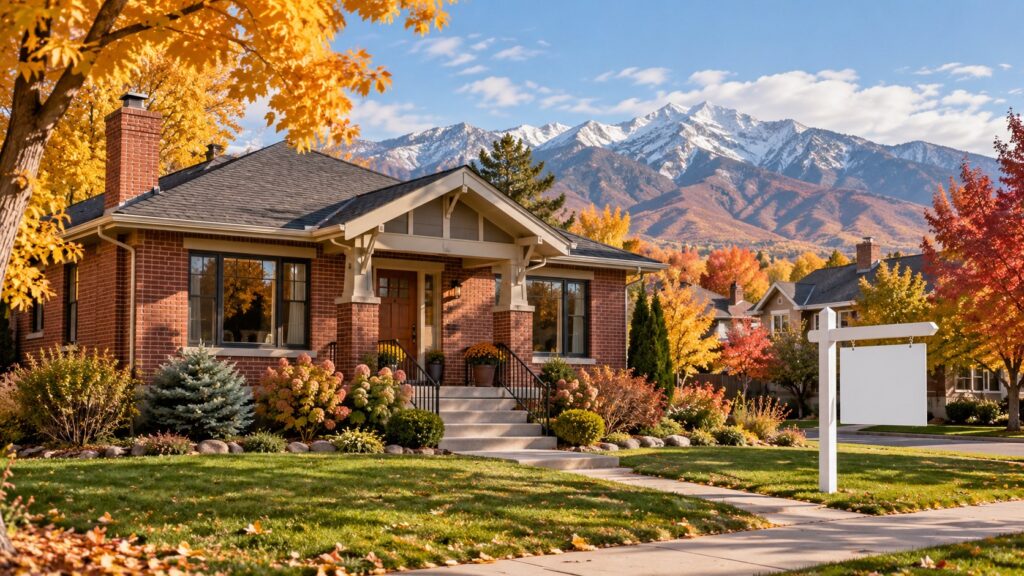
Utah Home Buying Strategy: Negotiate Price, Seller Credits and Buydowns
By Daniel Paris, Utah mortgage broker at UtahLowRate.com | NMLS #243976 | 27+ years of mortgage experience
Last updated: October 9, 2026
Quick answer: A practical Utah home buying strategy is to find a fairly priced home, identify the seller’s priorities, and compare a price reduction with usable seller-paid closing costs or a mortgage buydown. Choose a home you can afford at the full mortgage payment today. A future refinance can be an opportunity, but it should never be necessary to make your purchase affordable.
Whether you are shopping in Salt Lake City, Murray, Sandy, Lehi or St. George, the best deal combines the right property with financing that fits your household. Daniel Paris with UtahLowRate.com helps Utah homebuyers compare loan structures before an offer becomes a commitment.
What Utah housing data tells buyers—and what it does not
More listings can give buyers more choices without making every home a bargain. In its July 27, 2026 report, KUER’s Utah housing-market coverage quoted a realtor describing approximately 14,000 active listings statewide. The report also cited a second-quarter median single-family home price of $645,000 in Salt Lake County, up 4.88% year over year.
That price figure is for Salt Lake County, not all of Utah. These are dated summer observations, not an October inventory count or a prediction about the home you are considering. Before making an offer, request current neighborhood comparisons from your real estate agent.
A townhouse in South Jordan, a detached home in Murray and a completed new-build in Lehi can have very different competition, HOA expenses and seller priorities. Use statewide context to guide your questions, then use recent comparable sales to evaluate the individual property.
Find motivated sellers and completed builder inventory
A motivated seller may value timing and certainty as much as the headline price. Ask your agent to screen for homes with longer marketing periods, repeated price reductions, vacant occupancy or a return to active status. Completed builder inventory can also be worth comparing with resale homes.

A listing that has been active for 45–60 days deserves investigation, but that does not prove financial distress. The property may be overpriced, need repairs, have an unusual layout or simply attract a smaller buyer pool. Find out why it has not sold before assuming the seller will accept a large discount.
For each finalist, review recent closed sales with similar location, size, condition and property type. Ask what the seller needs: a particular closing date, time to move, fewer uncertainties or relief from carrying costs. A well-supported offer with dependable financing can answer those needs while preserving appropriate inspection, appraisal and financing protections.
Compare a price reduction with seller-paid closing costs
Ask your lender and agent to compare three versions of the same purchase. Each changes a different part of your finances.
| Structure | Primary benefit | What to check |
|---|---|---|
| Lower purchase price | Reduces the property price and may reduce the loan balance | Comparable sales, down payment and resulting payment |
| Seller closing-cost credit | Reduces eligible out-of-pocket closing expenses | Actual eligible costs and program concession limits |
| Seller-funded buydown | Provides temporary payment assistance or funds permanent discount points | Full payment, subsidy cost and expected mortgage holding period |
A lower price can be attractive when you want a smaller balance. A credit can be useful when preserving savings for moving expenses, repairs and emergencies matters more. A buydown deserves its own comparison because the benefit depends on its structure.
Under Fannie Mae’s interested-party contribution rules, financing concessions are restricted by occupancy, loan-to-value ratio and eligible costs. Seller-funded temporary or permanent buydowns generally count toward those limits; certain builder forward commitments have different treatment. Other loan programs have their own rules.
Get the permitted amount and intended use approved before writing the offer. A seller credit is not unrestricted cash back and cannot simply replace required down-payment funds.
Understand a 2-1 mortgage buydown before accepting one
A 2-1 buydown uses funded assistance to reduce your initial out-of-pocket principal-and-interest payments. The note rate remains unchanged. The assistance typically produces payments calculated two percentage points below the note rate for the first year, then one point below for the second year. The full note-rate payment applies afterward.
For illustration, a mortgage with a 6.5% note rate would have subsidized payments calculated using 4.5% in year one and 5.5% in year two. From year three, the borrower pays the full 6.5% note-rate payment. These percentages are an example, not a current rate quote. Taxes, insurance, mortgage insurance and HOA costs must still be considered separately.
Fannie Mae’s temporary buydown guidance requires qualifying at the note rate. Eligibility depends on the transaction and program; for example, Fannie Mae does not allow these temporary buydowns on investment properties or cash-out refinances.
Use temporary savings to support an already affordable purchase. Ask how unused funds are handled if you sell or refinance early, and read the agreement. Do not build a budget that requires rates to fall before the subsidy expires.
Compare builder incentives with the full purchase cost
A completed new-build in Lehi, Saratoga Springs or Herriman may come with financing incentives. Compare its total cost with a similar resale rather than choosing solely from the advertised rate.
Request the offer in writing. Establish whether the rate lasts for the full term, is temporarily subsidized or belongs to an adjustable-rate loan. Ask about eligibility, expiration dates, points, lender fees and required lender or title arrangements. Confirm which incentives remain if you use an outside lender.
Include lot premiums, upgrades, landscaping, HOA dues and realistic taxes and insurance. For new construction, ask whether the tax estimate reflects a completed home rather than only the land. Also review warranty coverage and obtain appropriate inspections.
Get an outside Loan Estimate for a comparable scenario. A builder promotion may be competitive, but the comparison should show the final price, payment, cash to close and financing costs. UtahLowRate.com can help you evaluate an outside financing option alongside the builder’s written proposal.
Buy today only if the full payment fits
Buying now and refinancing later can work when the original purchase stands on its own. Refinancing depends on future rates, equity, credit, income, property value and program eligibility. It also involves costs.

Start with your full housing obligation: principal, interest, taxes, homeowners insurance, applicable mortgage insurance and HOA dues. Then leave room for maintenance, utilities and a cash cushion after closing. Approval alone does not determine your comfortable spending level.
When comparing mortgages, obtain quotes on the same day using the same loan amount, loan type and lock period. Ask for both a no-point option and a permanent rate-buydown option. The Consumer Financial Protection Bureau’s Loan Estimate comparison guide explains how to review fees, credits, payments and cash to close.
If upfront points cost $4,000 and reduce the payment by $100 monthly, the simple break-even is 40 months. That illustration excludes other differences and the time value of money. Selling or refinancing earlier could prevent you from recovering the cost, so compare the expected holding period rather than assuming a lower rate always wins.
Put the strategy into a practical offer
For a hypothetical home listed at $600,000, begin with supported value rather than an automatic percentage below asking. Then have your agent prepare the proposed price, lender-approved seller credit and requested closing schedule.
An offer framework could say: “Our offer is based on comparable sales and includes seller-paid closing costs within lender limits. We have financing preapproval, can discuss your preferred closing date, and are retaining the protections appropriate to this purchase.” Your agent should translate that framework into the contract terms.
Before submitting, confirm the payment, cash to close, remaining reserves and treatment of any unused credit. If you are self-employed, review Utah bank statement mortgage options. For a larger loan, compare jumbo mortgage financing in Utah. Program availability and concessions vary, so select the financing before relying on an incentive.
Frequently asked questions
Is now a good time to buy a house in Utah?
It can be a good time if the home is fairly priced, fits your plans and is affordable at today’s full payment. Evaluate current neighborhood sales and your finances rather than relying on a prediction that rates or prices will change.
Should I ask for a lower price or seller-paid closing costs?
A lower price can reduce the loan balance, while seller-paid closing costs can preserve cash at closing. Compare both structures using the actual payment, eligible costs and lender-approved concession limits.
Does a 2-1 buydown lower my actual mortgage rate?
No. A 2-1 buydown provides temporary payment assistance while the mortgage note rate remains unchanged, and the full note-rate payment applies after the subsidy ends.
Can I use a seller credit for my down payment?
A standard seller closing-cost credit cannot replace your required down payment. Your lender must confirm eligible uses and the concession limits for your specific mortgage program.
Are builder mortgage incentives always the best deal?
No. Compare the final home price, incentive conditions, loan costs, full payment and cash to close with an outside lender’s offer.
Can I refinance my Utah mortgage if rates drop?
Possibly, if you meet the future lender’s requirements and the savings justify the costs. Lower rates alone do not guarantee approval or make a refinance worthwhile.
Review your Utah purchase financing with Daniel Paris
Daniel Paris | UtahLowRate.com
Utah mortgage broker | NMLS #243976 | 27+ years of mortgage experience
Phone: 801-604-4949
Website: UtahLowRate.com
Service area: Utah statewide, including Salt Lake County, Utah County, Davis County, Weber County, Summit County, Wasatch County and Washington County.
Call Daniel Paris to compare a purchase price reduction, seller-paid closing costs and eligible buydown options before you submit an offer. Learn more about working with a Utah mortgage broker.

