
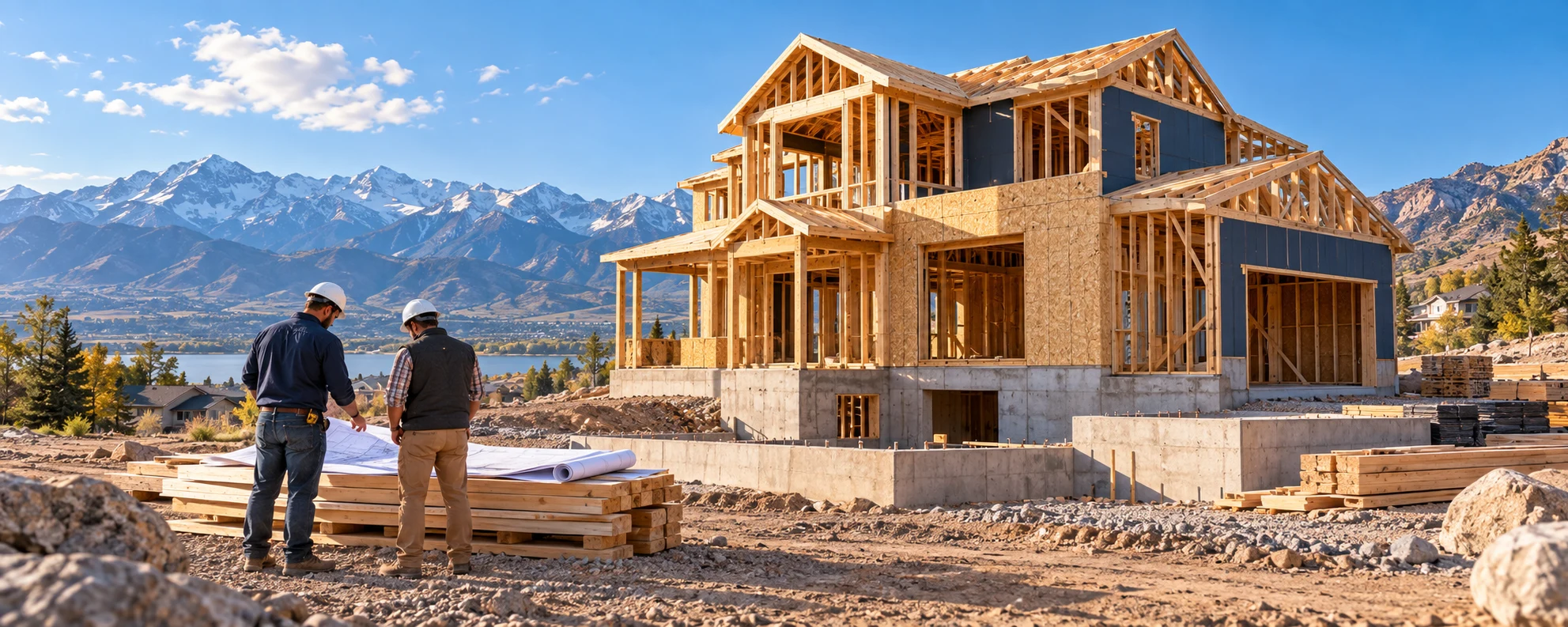
Private Spec Construction Loan Guide for Utah Home Builders
This private spec construction loan guide helps Utah home builders prepare a financing request before buying a lot or breaking ground. A strong deal needs more than an attractive house plan. It needs a realistic budget, enough cash to handle delays and a clear plan to repay the loan when the home sells.
Utah Low Rate helps builders explore private spec construction loans in Utah. This guide walks through the decisions that can make your project easier to evaluate.
Quick Answer: How Does Spec Construction Financing Work?
A private spec construction loan finances a home intended for resale, often before a buyer is under contract. The lender reviews the property, builder, budget, equity and repayment plan. Funds typically arrive through an initial advance and approved construction draws. Loan terms and required cash depend on the project and lender approval.
Request a Spec Construction Review Call Daniel Paris: 801-604-4949
Start With the Project’s Intended Use
A spec home is built to sell rather than for a homeowner who already has a custom construction contract. The builder takes on the risk of finding a buyer at a price that supports repayment and the expected profit.
Explain the intended use accurately from the start. A business-purpose spec project, a home you plan to occupy and a build intended as a rental can require different financing. Private money does not mean that every use qualifies under the same rules.
If you are building a personal residence, review construction-to-permanent financing. If you need temporary financing around another property, explore bridge loan options. Spec financing generally needs a sale or separately approved refinance; automatic conversion should never be assumed.
Private Spec Construction Loan Guide: What Makes a Strong Request?
Give a lender a clear story: what you are building, what it costs, who will finish it and how the loan will be repaid. Support that story with documents that agree with one another.
- Builder experience: Show completed projects similar in size and price.
- Site readiness: Identify access, utilities, permits and remaining site work.
- Credible pricing: Use comparable homes that support the proposed resale price.
- Financial capacity: Explain available equity and funds for costs outside the loan.
- Schedule: Allow time for construction, inspections, marketing and closing.
A first-time sponsor should describe the experienced contractor and project manager involved. LLC ownership may be possible, but lenders can still require entity records, sponsor review and personal guarantees.
Build a Budget That Includes the Whole Project
Start with detailed bids. Then separate land, hard costs, soft costs, financing costs and contingency. Ask which expenses the lender considers eligible for funding. A cost can be necessary to the project without being covered by the loan.
| Budget category | Items to review |
|---|---|
| Land and site | Lot cost, existing debt, grading, utilities and access |
| Hard costs | Labor, materials, foundation, framing and finishes |
| Soft costs | Plans, engineering, permits and eligible professional fees |
| Financing and carrying | Interest, points, inspections, taxes and insurance |
| Contingency and exit | Overruns, extra holding time and sale expenses |
Keep sale costs in your profit calculation even if they are outside the construction budget. Selling commissions, concessions and closing expenses can reduce the cash left after payoff. Test the project with a lower sale price and a longer holding period before deciding how much leverage feels workable.
Understand LTC, LTV and the Cash You Need
Loan-to-cost (LTC) is the loan commitment divided by lender-approved costs. Loan-to-value (LTV) is the loan divided by the value the lender uses, which may be the appraised as-completed value. A lender can apply both limits.
Here is an illustration, not an offered program. Assume $1,000,000 in approved costs, $1,250,000 in as-completed value and a $700,000 commitment. That equals 70% LTC and 56% LTV. The remaining $300,000 of approved costs must come from accepted borrower equity and funds.
If the lender accepts $200,000 of land equity toward that difference, another $100,000 would remain for the approved cost gap. Actual cash needs can be higher because of reserves, ineligible expenses and timing. Existing land debt also affects the equity calculation. Confirm the lender’s treatment of land value and prior expenses in writing.

Plan Working Capital Around Construction Draws
A loan commitment is not the same as cash available on the first day. Draws release funds under the agreement as construction progresses. The process may require invoices, inspections, lien documentation and proof that the work matches the budget.
Ask whether you must invest your equity first. Also ask whether funding reimburses completed work or follows another method. A builder can have an approved loan and still need working capital to pay suppliers before reimbursement arrives.
Clarify how change orders, deposits, stored materials and retainage are handled. Keep records organized by budget line. If a bid changes, explain how the extra cost will be paid rather than assuming the original commitment increases automatically.
Compare the Full Quote, Including Interest and Extensions
The lowest stated rate may not produce the lowest total cost. Request a written breakdown of origination points, broker fees, valuation, title, legal, inspection and draw charges. Review minimum interest and prepayment terms as well.
Confirm whether interest is based on the funded balance and whether unused-funds or other charges apply. If an interest reserve is included, understand its funding and limits. It pays interest from a budgeted account; it does not eliminate the interest cost.
Check the maturity date against both construction and marketing time. Ask about extension conditions and fees before closing. An extension needs lender agreement. The OCC’s construction lending reference discusses interest reserves and project monitoring as bank risk-management topics; it does not set your private lender’s program terms.
Prepare a Primary Exit and a Workable Backup
For a spec build, the primary exit is usually a sale. Estimate the net proceeds after selling costs and compare them with the expected payoff, including interest and fees. Leave time for buyer financing and closing rather than treating a signed contract as immediate repayment.
Holding the home as a rental can be a backup only when both the property and financing work. Review Utah DSCR loans and DSCR refinance requirements early. A new loan needs separate approval, eligible rent evidence, sufficient equity and any required completion or seasoning.
For a luxury home buyer’s permanent financing, see Utah jumbo mortgages and super jumbo options. Those buyer loans are separate from the builder’s construction loan.
Match the Build to Its Utah Location
Use comparable sales from the home’s actual market. A Salt Lake Valley infill project, a Utah County subdivision home, a Park City luxury build and a St. George spec home can face different site costs and buyer demand.
Check local requirements with the appropriate city or county. Review access, utility connections, lot restrictions and permit status. Mountain construction schedules should allow for weather and site conditions. Across Utah, financing and the construction timeline should reflect the property’s specific facts.
Your Pre-Application Checklist
- Summarize the property, intended use, requested loan and exit.
- Gather plans, specifications, bids, contract and schedule.
- Document lot ownership, liens and permit status.
- Prepare a builder resume and comparable completed projects.
- Calculate accepted equity, cash needs and contingency.
- Review resale evidence and a delay scenario.
- Request a written quote covering funding conditions and total costs.
Use our application page when ready for the next step. Ask how to submit financial records securely rather than placing sensitive documents in a public inquiry.
Private Spec Construction Loan Guide FAQs
Do I need a buyer before applying?
Spec financing is designed for projects that may not have a buyer under contract. Approval depends on the project and lender.
Can my lot count toward the equity requirement?
Possibly. The lender decides the eligible land value and how existing liens affect the credit.
Can I finance a project already underway?
Some lenders may consider it after reviewing completed work, liens, permits and the cost to finish. Discuss this before assuming eligibility.
What credit score or down payment is required?
There is no single rule for all private spec loans. Request a review of your experience, credit, equity, liquidity and property.
Is a rental refinance guaranteed if the home does not sell?
No. The refinance needs a separate approval and must meet the new lender’s requirements.
Review Your Spec Home Financing With Daniel Paris
Daniel Paris has 27+ years of mortgage experience. Share your Utah project location, lot status, builder experience, budget and timeline. Utah Low Rate can help you explore financing options and the next steps for a project review.
Terms depend on lender availability, underwriting, valuation and final approval. Examples are illustrative and are not loan offers or commitments to lend.

