

By Daniel Paris | Utah Low Rate | NMLS #243976
Last reviewed: October 2, 2026
These bank statement mortgage questions Utah business owners ask explain income calculations, down payments, credit and refinancing. If tax-return income does not reflect your business cash flow, an eligible bank statement program may help. Daniel Paris reviews self-employed mortgage scenarios across Utah, including Salt Lake City, Park City, Heber City, Lehi and St. George.
Top 25 Bank Statement Mortgage Questions in Utah
1. How do bank statement mortgage loans work?
The lender reviews eligible deposits over a selected period to calculate qualifying income. Business expenses, ownership and deposit sources affect the result. Credit, debts, assets and the property are still reviewed. Bank statement financing is an alternative income documentation method, not an automatic approval.
2. Can I get a mortgage without using tax returns?
Eligible programs may use bank statements rather than tax returns to document self-employed income. You still need evidence of a real operating business, acceptable deposits and the ability to repay. Ask which documents the selected lender requires before applying.
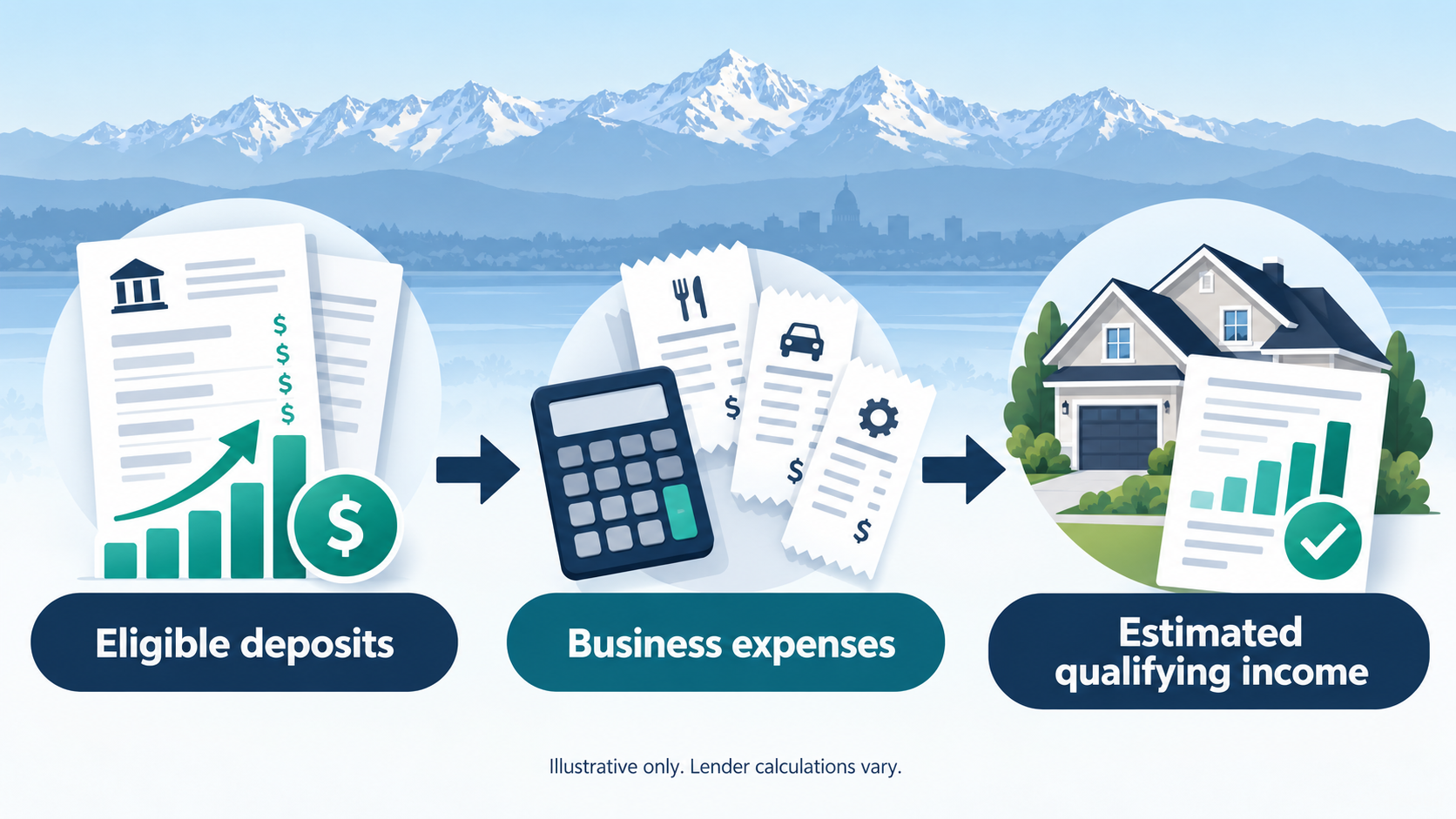
3. How is my qualifying income calculated from bank statements?
A common starting point is eligible deposits divided by the number of months reviewed, followed by the required expense and ownership adjustments. For example, $240,000 over 12 months is $20,000 monthly before expenses. An illustrative 25% expense deduction leaves $15,000; the actual factor depends on lender rules.
4. Do I need 12 or 24 months of bank statements?
Programs commonly review 12 or 24 months. A shorter period may reflect recent growth, while a longer period can show seasonal stability. The lender also reviews trends and consistency. Compare both periods when available rather than assuming one always produces the better result.
Read more: 12-Month vs. 24-Month Bank Statement Loans in Utah
5. How much down payment do I need?
Down payment depends on credit, loan size, occupancy and the selected program. Some options allow a lower down payment, while other scenarios require more equity. Budget for closing costs and remaining reserves as well as the down payment.
6. What credit score do I need for a bank statement loan?
Minimum scores differ among programs. Credit also influences pricing, maximum loan-to-value and reserve requirements. A score alone does not establish eligibility. Review your mortgage credit report alongside business history, deposits and available funds.
7. What are today’s bank statement mortgage rates in Utah?
Request a current scenario-specific quote. Credit, equity, loan amount, income documentation, occupancy and lock period affect pricing. Compare APR, points and lender fees with the rate. Confirm whether the quote is locked and how long the lock lasts.
8. Should I use personal or business bank statements?
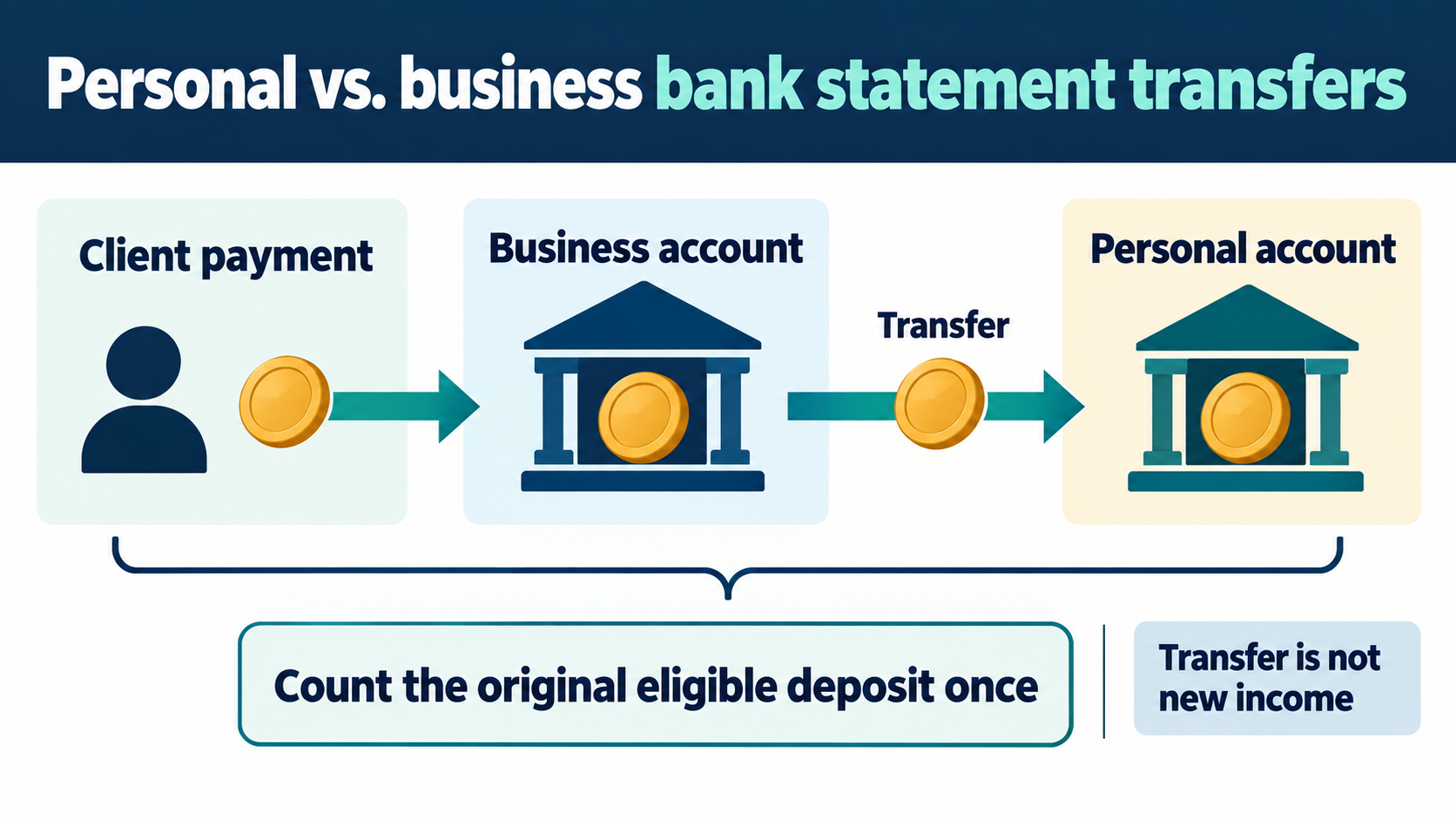
Choose the account type that accurately documents your business income under lender rules. Business accounts usually require an expense adjustment. Personal deposits may need source verification and cannot automatically be treated as income. Avoid counting the same money in both accounts.
9. What percentage of my business deposits counts as income?
Only eligible deposits are considered, and the lender applies its required expense method and any ownership adjustment. Expense treatment depends on your business and documentation. Gross deposits are not the same as qualifying income. Ask for a calculation using your actual statements.
10. Do lenders exclude transfers and one-time deposits?
Transfers between your own accounts are generally excluded to avoid double-counting. Loan proceeds and other nonbusiness receipts are not ordinary business revenue. A large or unusual deposit may require documentation before the lender decides whether it is eligible.
11. Can a CPA letter help document a lower business expense percentage?
Some lenders accept an eligible CPA or tax-professional expense analysis under specific rules. It may support a different expense factor when properly documented. A letter does not automatically override lender requirements; review the permitted format and supporting records first.
12. Can I qualify with only one year of self-employment?
Some programs may consider a shorter business history when prior work in a similar field and other requirements support the application. This is lender-specific. Provide your business start date and relevant prior employment history for review.
13. Can I qualify if my tax returns show low income because of write-offs?
Potentially. Bank statement programs can assess eligible business cash flow using a different documentation method. Business expenses still matter, so the lender does not simply count every deposit as income. Compare alternative documentation with conventional qualification before choosing.
14. How many months of reserves do I need?
Reserves are eligible assets left after closing. The required amount depends on the program, loan size and property. If a program requires six months and the required housing payment is $3,000, the reserve target is $18,000. Reserves are documented assets, not a separate closing fee.
15. Can I combine bank statement income with my spouse’s W-2 income?
Some programs allow eligible income sources from co-borrowers to be combined. Each source must meet the lender’s documentation rules, and both borrowers’ debts and credit are considered. Ask whether the selected program supports your combination of income.
16. Can I get a jumbo mortgage using bank statements?
Yes, eligible jumbo bank statement programs may finance larger loan amounts. Maximum balances, down payments, reserves and occupancy requirements vary. Larger loan requests need a complete review of the property, cash flow and assets.
17. Can I use a bank statement loan for a second home or rental property?
Some programs allow primary homes, second homes or investment properties. Occupancy changes pricing and qualification rules. For a rental property, also compare DSCR financing where appropriate. Tell the lender how the property will actually be used.
18. Can I refinance or take cash out with a bank statement loan?
Eligible refinance programs may allow rate-and-term refinancing or cash-out. Equity, seasoning, loan size, credit and documented income affect the options. Compare total costs and the new payment with your existing mortgage before proceeding.
19. Can I qualify after bankruptcy or with a lower credit score?
Some alternative programs consider prior credit events, but waiting periods and terms differ. The type of bankruptcy, discharge date and recent payment history matter. Request a specific review instead of assuming that one waiting period applies to all lenders.
20. What documents do I need besides bank statements?
Expect identification, business-history evidence, asset statements, property information and documents explaining unusual deposits. The lender may request an expense analysis or other business records. Obtain a program-specific checklist so missing records do not delay underwriting.
21. Do overdrafts, declining deposits, or irregular income affect approval?
They can. Underwriters review cash-flow stability and may ask about overdrafts, seasonal changes or declining revenue. Explain unusual activity with supporting records. A strong average does not eliminate the need to review recent trends and business sustainability.
22. Is a bank statement loan better for me than a conventional mortgage?
It depends on how you qualify and the total costs. Conventional financing may be attractive when tax-return income supports approval. Bank statement financing may help when eligible cash flow better reflects income. Compare rates, fees, equity requirements and long-term payments.
23. Is there a prepayment penalty?
Ask about the exact loan terms before committing. Availability and restrictions depend on the product, occupancy and applicable law. If a penalty applies, review its amount, duration and trigger. Do not assume every bank statement loan includes one or that every loan excludes one.
Read more: Bank Statement Loan FAQ: 50 Mortgage Questions Answered
24. Can I refinance into a conventional mortgage later?
Potentially, if you meet the future lender’s income, credit, equity and property requirements. A conventional refinance is a new application and is not guaranteed. Consider closing costs, any applicable penalty and the time needed to document qualifying income.
25. How much home can I afford using my business deposits?
Start with eligible monthly deposits after required expenses and ownership adjustments. Then review monthly debts, the full housing payment, down payment and reserves. An income estimate helps establish a starting budget; lender underwriting determines the approved amount.
Find your next bank statement mortgage resource
Use the Bank Statement Loan FAQ hub for more answers. Compare business statements, Park City financing and St. George options.
Bring your business start date, 12 or 24 months of complete statements, estimated credit range, purchase price and available assets. Daniel can identify which documentation route fits your situation.
Start Your Mortgage Application | Ask Daniel Paris | 801-604-4949
Program availability and terms vary by lender, loan amount, documentation and property. Examples are educational and do not constitute loan approval or a rate offer.

